
ELECTRIC PUPPET: Young people animate their own ideas
DELIVERED | FED SQUARE AND ROBOTRONICA
An interactive character-making experience that moves from digital collage to live animation through the participant’s own body.
The opportunity
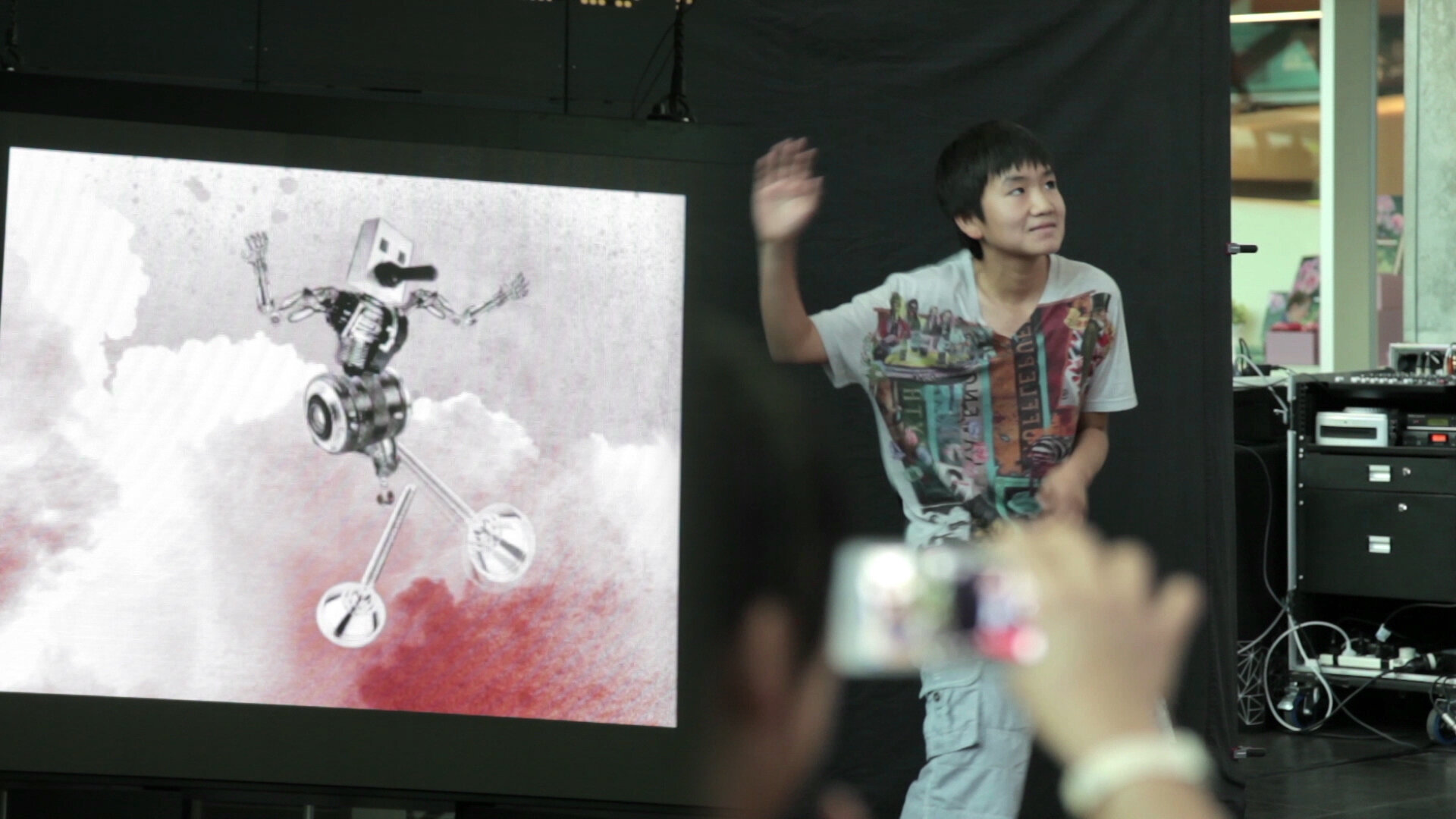
Electric Puppet gives families a direct role as makers. Federation Square commissioned the original format, and QUT’s 2017 Robotronica programme documents a drop-in presentation where visitors designed and animated digital robots.
The experience
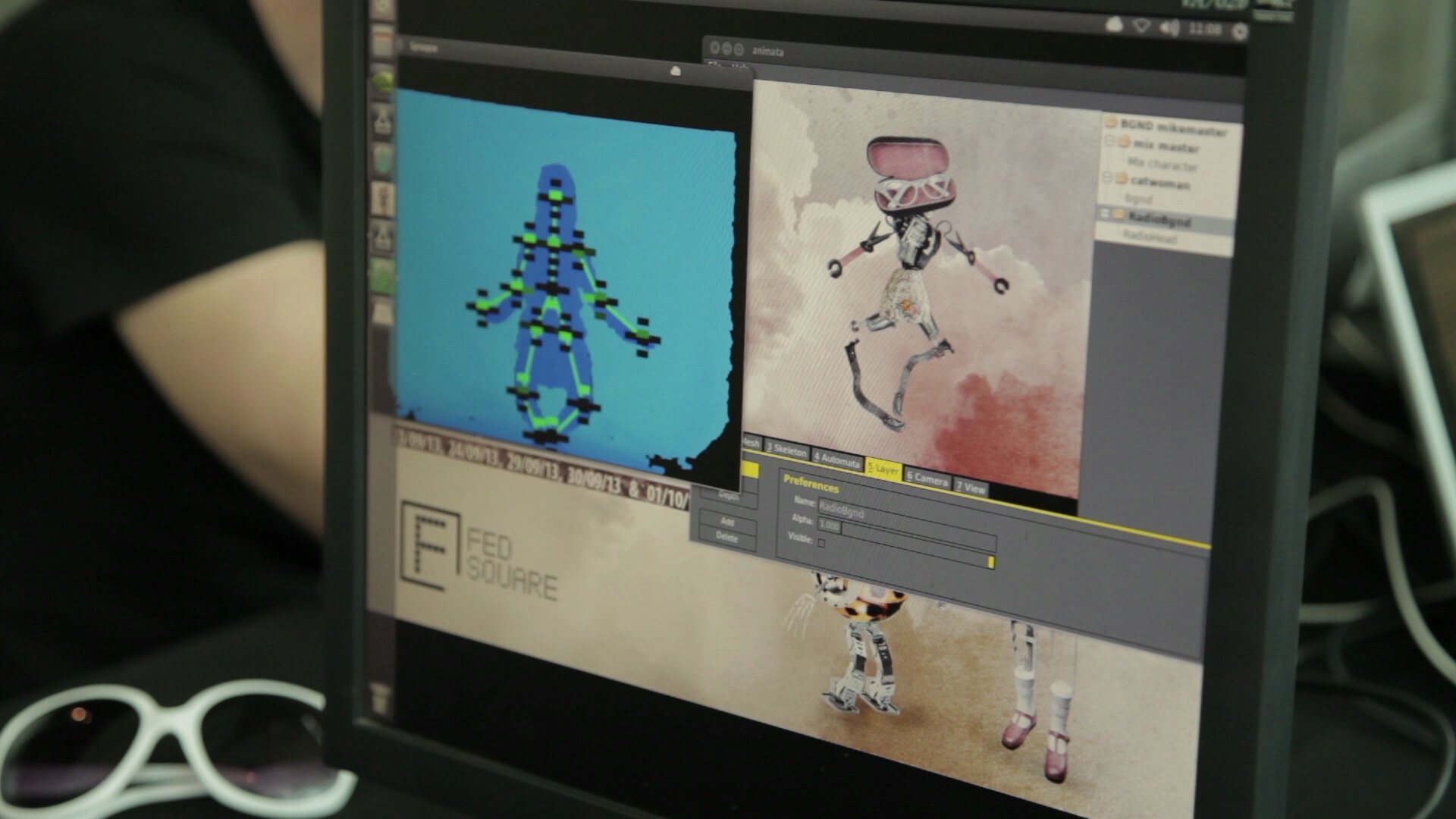
Participants assemble a character from a library of body-part images, then move to animate it through real-time tracking. Personalisation creates a recognisable connection between the person, the character and the public screen.
Documented delivery
QUT’s Robotronica programme documents the interaction and drop-in format. Wonderment Walk also records a commissioned 2014 adaptation involving John Olsen’s Frogs sculpture. Different versions are kept distinct rather than assigned a single launch year.
Make a character and become it
The interaction combines authorship and performance: create the image, then discover how your own movement changes it. A shared screen lets families and other visitors witness the result.
Opportunities for a future commission
Ownership through making
Participants decide what their character looks like and how it moves. This offers an accessible starting point for creative expression and a practical way for youth programmes to include participant-authored imagery.
Learning through physical play
The visible link between movement and animation lets people explore digital systems through action. A future programme could assess creative confidence and understanding through short tasks and participant reflection.
Nature interpretation with precedent
Wonderment Walk’s Frogs adaptation brought an existing sculpture into an interactive digital experience. The organiser describes a connection with environmental awareness, providing a precedent for future local-species storytelling.
A council library, museum or festival could pair character creation with a family-friendly early-evening showcase. A nature edition could focus on local wildlife, with ecological guidance and permissions for any existing artworks or cultural stories.
Audience insights and engagement data
Future versions could record character-part selections, completed creations and session duration to understand creative preferences and improve facilitation. Optional reflections could add context to the logs. Parents, carers and adult visitors could separately provide email addresses for future programmes with clear consent. Character choices would not identify children, and participation would remain separate from any mailing-list sign-up.
How a future commission could be evaluated
- Creative behaviour
- Log selected character parts, completed creations and session duration where supported.
- Learning and interests
- Use agreed creative tasks and optional prompts on nature themes or preferred activities.
- Family follow-up
- Measure separate parent, carer or adult email opt-ins for future programmes.
A useful commissioning step
Choose the age group and balance between drop-in play and facilitated learning. Test tracking, seated interaction and screen visibility. Agree supervision, participant-image permissions and any third-party artwork rights.
Sources and credits
QUT Robotronica 2017 programme; Wonderment Walk Launch Exhibition, February 2014; Georgie Pinn event portfolio. Frogs is a work by John Olsen; the interactive adaptation was commissioned from Georgie Pinn.