ELECTRIC CORPSE: Children make a film with characters they drew themselves
DELIVERED | ARTPLAY AND ARTISTS IN SCHOOLS
Children turn their own drawings into characters, stories and a collaborative animated short film through body and facial tracking.
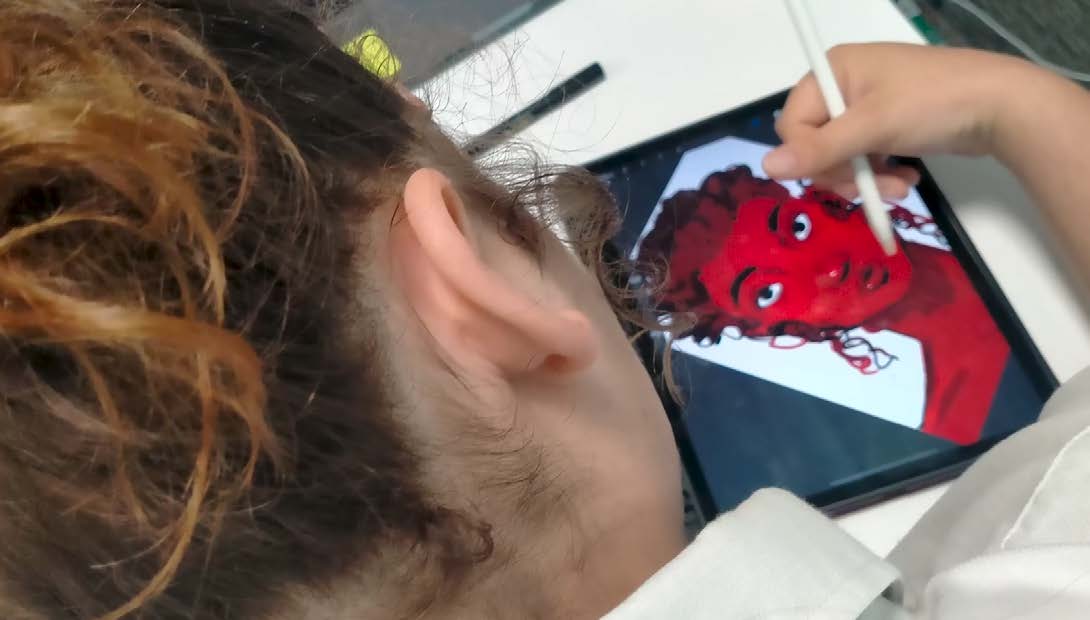
Electric Corpse begins with children's own drawings. In a shared drawing game, each child adds to a character before the group invents its personality and story. Body and facial tracking then let participants make those paper characters move, speak and react through their own performance. The group builds an animated short film together, from first sketch to sound and screening.
A Role For Every Child
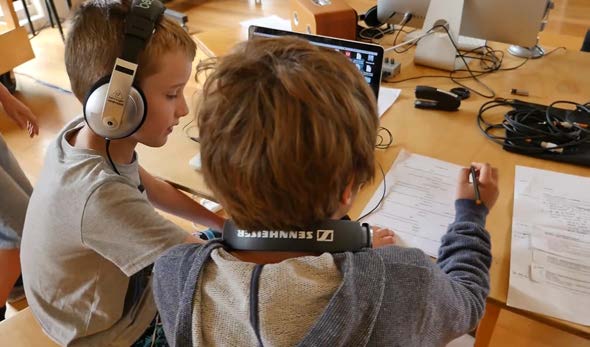
Children can move between roles that fit their interests and confidence: organising production, devising the script, acting and motion capture, drawing scenes and backgrounds, or creating voices, music and sound effects. The production needs all of them. A child who is quiet in one setting may find a way to contribute through sound or image; an energetic performer can bring a character to life with their whole body.
What Was Made
City of Melbourne's ArtPlay commissioned the workshop, which also ran as an Artists in Schools residency at Brunswick East Primary School. Georgie's 2016 notes link to films made by participants and describe a screening with an interactive installation for audiences to animate the characters. Learning outcomes were not formally measured.
Sources: Georgie Pinn, Electric Corpse project email, 8 Sep 2016; Georgie's account and supplied photograph.
Public value and next application
Learning Through Making
The film gives children a reason to draw, listen, move, perform, negotiate and solve problems together. Visual, auditory and movement-led activities all feed the same result, so learning happens through making. The technology supports embodied, social play: participants move between drawing tools and full-body performance instead of remaining seated at screens.
Creative Agency
Each child can see a trace of their contribution in a finished work. The film can be screened, shared with families and revisited after the workshop, giving their ideas a life beyond the session. Georgie's account emphasises the confidence that comes from seeing an original character and story taken seriously.
A Community Engagement Format
The model can be shaped for schools, libraries, arts centres, holiday programmes and community festivals. A public screening or evening activation can bring families and neighbours into the outcome. The same core journey - draw, devise, perform, sound and share - can be adapted to different ages, group sizes and local stories.
Next Generation
A new commission could test live, more generative animation so children see their characters evolve and respond as they play. The aim remains human authorship: the children choose what the characters do and how the film unfolds. Any new tools should be assessed for accessibility, privacy, moderation and reliable operation with a group.
A Useful Commissioning Step
Pilot one cohort with an education or community partner. Co-design the roles, capture a short film and public sharing moment, then gather participant, educator and family feedback before extending the format.
Sources: Georgie Pinn, Electric Corpse project email, 8 Sep 2016; Georgie's account and supplied images. Future uses are proposals.